
Living in Dubai comes with its own set of surprises, especially when it comes to deciphering your utility bill. As someone who has navigated the intricacies of these charges, it’s clear that your expenses extend far beyond just electricity and water.
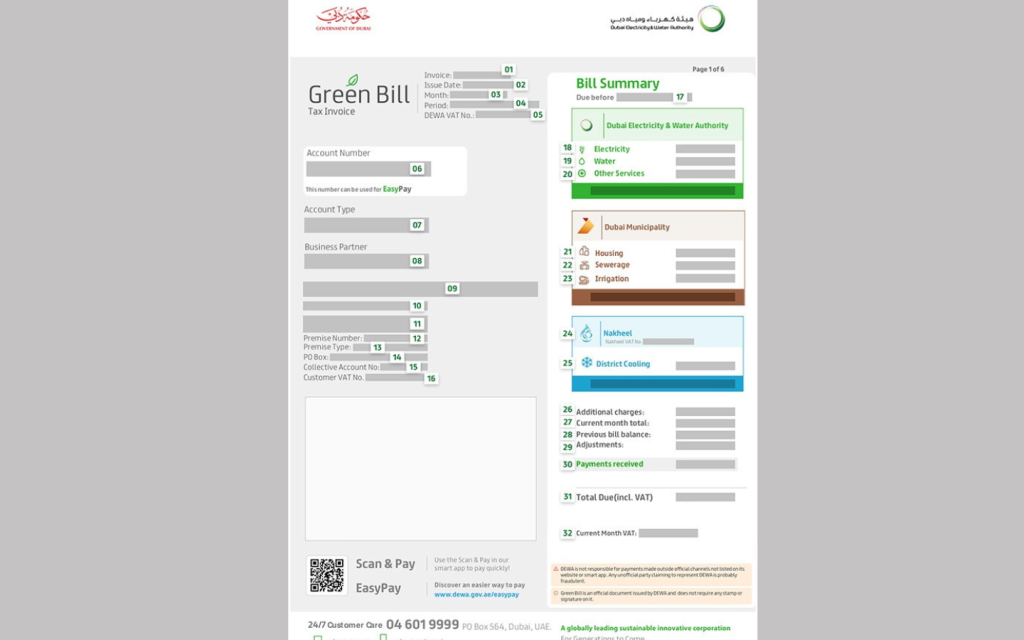
There are district cooling fees, municipality charges, and more lurking in the fine print. It can be overwhelming for newcomers, but fear not! I’m here to shed light on how each component of your bill contributes to your overall expenses.
With a bit of insight, you can better manage your budget and possibly save some dirhams. Let’s break it all down and make sense of those puzzling charges together!
Dubai Utility Charges Breakdown
When reviewing your Dubai utility bill, it’s crucial to understand the various charges you incur. This can influence your overall expenses significantly.
Water & Electricity Charges – DEWA Bill
Understanding your water and electricity charges on your DEWA bill is pivotal for managing your monthly budget in Dubai, especially as a European expat. One common myth is that these charges are exorbitantly high, but with a grasp of the slab tariff system employed by DEWA, you can find ways to keep costs down. Essentially, the more you consume, the higher the rate per unit, so it pays to be mindful of your usage.
In addition to the tariff structure, you’ll encounter other fees, such as the fuel surcharge and VAT, which can catch newcomers off guard. Monitoring your consumption regularly not only helps in budgeting but can also lead to savings, as even minor reductions can add up over time. Staying within the lower tiers of usage is crucial; every dirham saved contributes to enjoying life in this vibrant city.
Electricity Tariff (Residential and Commercial)
Living in Dubai doesn’t automatically mean you’ll face exorbitant electricity bills; understanding the local tariff structure can significantly ease your financial concerns. Many newcomers believe that energy costs are uniformly high, but the truth is, the tariff system is designed to promote energy efficiency. For instance, the slab tariff system increases rates based on your consumption levels, encouraging conscious energy use and ultimately saving you money.
Additionally, the meter service charges range from AED 5 to AED 35, depending on your connection type. It’s also worth noting the fuel surcharge, which currently stands at AED 0.060 per kWh and fluctuates with global fuel prices. By being aware of these factors and planning your usage wisely, you can keep your electricity costs manageable while living in this vibrant city.
Water Tariff (Residential)
Understanding Dubai’s water tariff structure is essential for managing your household budget, especially as a European expat. The rates are tiered according to your monthly usage, providing a fair system for residents. For example, if your consumption is up to 27 cubic meters, you’ll pay AED 7.700 per cubic meter, which is quite reasonable compared to many European cities. While some may believe that Dubai’s water bills are exorbitant, this is often a misconception; the costs increase gradually after the initial tier, ensuring you’re not hit with overwhelming charges. Additionally, there’s a minor meter service charge and a fuel surcharge to consider, but these are manageable with careful planning. Familiarising yourself with these rates can help you avoid unnecessary stress and make living in Dubai more enjoyable.
District Cooling Charges
When you arrive in one of Dubai’s sleek developments, you’ll likely encounter district cooling—a system that efficiently cools entire buildings using chilled water pumped from a central plant. This method is not only eco-friendly but can also save you money. However, many newcomers mistakenly believe it’s cheaper than traditional air conditioning overall, which isn’t always the case when you factor in various charges.
District cooling fees typically consist of a consumption charge, which is based on your actual cooling usage measured in Refrigeration Tons (RT), and a capacity charge, a fixed monthly fee determined by the size of your property. Lastly, there’s a one-time connection fee to initiate the service. Understanding these costs helps you budget effectively and ensures your experience in scorching Dubai is as comfortable as possible!
Dubai Municipality Fees
While you may believe that managing your district cooling charges means you’ve mastered your utility expenses, the reality is more nuanced. One significant aspect to consider is the Dubai Municipality fees, which play a crucial role in funding public services that keep this vibrant city functioning seamlessly. Following your Ejari registration, the municipality captures your property information and imposes a 5% housing fee based on your registered rent, which is conveniently distributed across your DEWA bill in monthly instalments.
It’s worth noting that many expats assume they won’t be affected by these fees if they’re only renting. However, property owners also incur charges calculated from the estimated rental value, indicating that everyone contributes to these essential services. Embracing this financial landscape is simply part of life in Dubai, ensuring you stay informed and prepared.